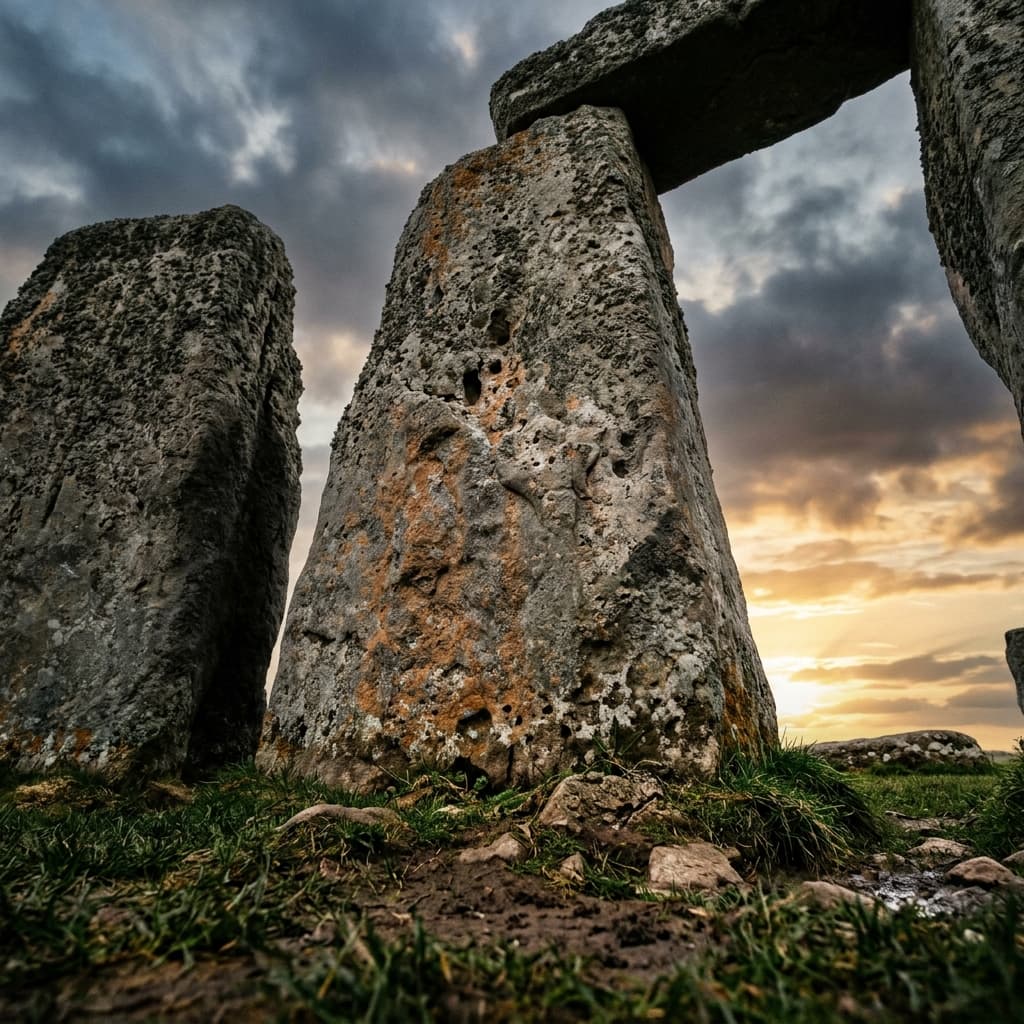
Stonehenge was built in multiple phases over approximately 1,500 years, beginning around 3000 BCE. Here is the essential history you need before your visit from Salisbury.
Phase 1: The Circular Ditch (c.3000 BCE)
The earliest Stonehenge was not a stone monument at all it was a circular earthwork: a ditch and bank approximately 100 metres in diameter. Archaeologists have found evidence of cremation burials within this enclosure, suggesting it served as a ceremonial or funerary site from its earliest use.
Phase 2: The Bluestones (c.2500 BCE)
Around 2500 BCE, 80 bluestones each weighing 2 to 5 tonnes were transported from the Preseli Hills in south west Wales, approximately 150 miles away. How these were moved, with Neolithic technology and across the sea, remains one of archaeology's great debates. They were erected in a double arc arrangement.
Ready to visit Stonehenge?
£15 return · Departs opposite Salisbury Train Station · Guaranteed seat
Phase 3: The Sarsen Stones (c.2400 BCE)
The largest stones you see today the trilithons (two upright stones with a horizontal lintel) are sarsen sandstone, sourced from Marlborough Downs 25 miles north of Salisbury. Each weighs up to 25 tonnes. They were shaped with extraordinary precision: the horizontal lintels are secured with mortice and tenon joints, and the upright faces are smoothed to a consistent finish. This is the defining construction phase.
Why Was It Built?
The honest answer is: we don't know for certain. Stonehenge is precisely aligned with the midsummer sunrise and midwinter sunset, strongly suggesting a calendrical or astronomical function. The evidence of cremation burials points to a site of the dead. It may have been all of these things a monument simultaneously to ancestors, to celestial cycles, and to the power of the community that built it.
Understanding this depth of complexity makes visiting Stonehenge via the Salisbury to Stonehenge Shuttle from Salisbury not just a tourist trip, but a genuine encounter with human history.
Ready to visit Stonehenge from Salisbury? The shuttle departs a 2 minute walk from Salisbury Train Station. Just £15 return per person, all in.
Check availability →Ready to visit Stonehenge?
The Salisbury to Stonehenge Shuttle departs six times daily from directly opposite Salisbury Train Station. £15 return per person, reserved seat. Luggage storage available from £5 per bag · Book during checkout.
Book your shuttle seat →